Entering the High-Power Satellite Market: A Step-by-Step Guide Based on Vast's New Initiative
Overview
On May 19, California-based startup Vast—best known for its ambitious space station plans—announced a new line of high-power satellites. This move signals a growing demand for satellites that can generate and manage significantly more power than traditional designs, enabling advanced payloads like high-resolution imaging, broadband connectivity, and in-space data processing. This tutorial provides a comprehensive guide for engineers, entrepreneurs, and space enthusiasts who want to understand how to develop such high-power satellites, drawing on the technical and strategic lessons from Vast's venture.
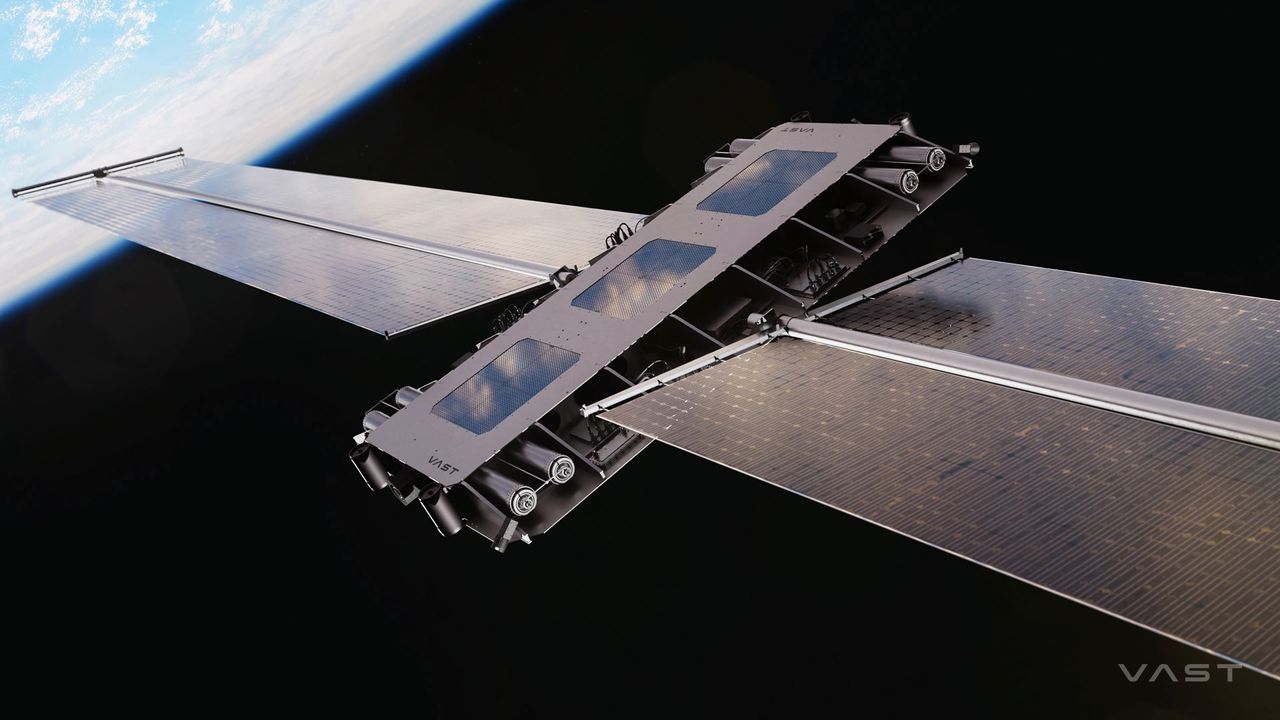
Whether you're planning a satellite constellation or upgrading an existing bus, the principles outlined here will help you navigate the complexities of designing, testing, and deploying a spacecraft that can handle 10 kW or more of electrical power.
Prerequisites
Technical Knowledge
- Satellite Engineering Fundamentals: Familiarity with orbital mechanics, power systems, thermal control, and communications.
- Electronics and Power Systems: Understanding of solar cells, batteries, power regulation, and distribution.
- Software: Basic knowledge of satellite flight software and control algorithms.
Resources
- Budget: High-power satellites can cost $10–50 million each; secure funding from investors, government grants, or commercial contracts.
- Team: A multidisciplinary crew of at least 5–10 engineers (mechanical, electrical, aerospace, software).
- Facilities: Access to clean rooms, thermal vacuum chambers, vibration tables, and launch integration services.
Step-by-Step Guide
Step 1: Define Mission Requirements and Power Budget
Start by specifying the satellite's purpose. Vast's new line likely targets high-throughput data relay or earth observation. Create a detailed power budget that lists all subsystems (payload, avionics, thermal, propulsion) and their peak/average consumption. Aim for a total generated power of 10–20 kW, typical for modern high-power satellites.
Example power budget table (simplified):
- Payload (imaging radar) – 4 kW
- Avionics & comms – 1.5 kW
- Thermal control – 0.8 kW
- Propulsion – 0.5 kW (intermittent)
- Total required: ~6.8 kW
Add 30% margin for inefficiencies and end-of-life degradation → target generation >8.8 kW.
Step 2: Design the Power System
Solar Arrays
Use high-efficiency triple-junction solar cells (30–34% efficiency) in a deployed array configuration. For a 10 kW bus, you'll need approximately 30 m² of panel area. Consider advanced technologies like roll-out solar arrays (e.g., ROSA) to increase power density.
Energy Storage
Lithium-ion batteries with high specific energy (200 Wh/kg) provide eclipse power. Size the battery for the worst-case eclipse (up to 35 minutes for LEO) plus a safety margin. For a 10 kW load during eclipse, you need ~6 kWh capacity → roughly 30 kg of batteries.
Power Management and Distribution
Implement a 100–150 V unregulated bus to reduce current and ohmic losses. Use maximum power point tracking (MPPT) for each solar string. Include redundant converters and bus protection.
Step 3: Select Propulsion System
High-power satellites often require electric propulsion (e.g., Hall effect thrusters) for orbit raising and station-keeping. Ensure your power system can supply high voltage and current to the thrusters. For a 10 kW satellite, a 5 kW thruster is common. Tip: Use the excess power during sunlight for thruster operation to avoid stressing batteries.
Step 4: Thermal Management
With high power comes high heat dissipation (up to 4–6 kW). Design a two-phase thermal control system using heat pipes or loop heat pipes to transfer heat from payloads to radiators. Position radiators on the anti-sun side. Use louvers or variable emissivity coatings for passive control.
Sizing: Radiator area (m²) ≈ Heat load (W) / [5.67×10⁻⁸ × ε × (T_sat⁴ – T_space⁴)]. For 5 kW at 300 K, you need ~10–15 m² of radiator area.
Step 5: Integrate High-Power Payloads
Vast's satellites will likely house advanced payloads like synthetic aperture radar (SAR) or optical communication terminals. Ensure the payload has an isolated power supply to prevent noise. Use EMI shielding and proper grounding to mitigate interference between high-power and sensitive electronics.
Step 6: Test and Validate
Subject the satellite to rigorous environmental testing:
- Thermal vacuum: Simulate space conditions for 72+ hours while running full power.
- Vibration: Random and sinusoidal vibration to withstand launch loads.
- Electromagnetic compatibility (EMC): Verify no harmful emissions or susceptibility.
Conduct a full power-on test where all subsystems operate at nominal and peak levels. Vast likely used such tests to validate their new line.
Step 7: Launch and Commission
Select a launch provider (e.g., SpaceX, Rocket Lab) that can insert your satellite into the target orbit. After separation, perform a series of checkouts: deploy solar arrays, charge batteries, boost orbit using electric propulsion, and then start payload operations. Vast's announcement suggests they are targeting both LEO and possibly MEO orbits.
Common Mistakes
1. Underestimating Thermal Loads
High-power satellites generate more heat than anticipated. Ensure your thermal model accounts for worst-case scenarios (e.g., maximum sun exposure, simultaneous payload operation). Solution: Add margin to radiator sizing and consider using phase-change materials for peak loads.
2. Ignoring Power Quality
Sudden load changes (e.g., from thrusters or payload modes) can cause voltage spikes or sags. Use a power distribution unit with fast circuit breakers and filter capacitors to maintain a stable bus.
3. Oversized Battery for Short Eclipses
In LEO, eclipses are 35 minutes max. But if you plan for higher orbits (e.g., GTO), eclipse duration reaches 1–2 hours. Adjust your battery sizing accordingly. Vast's satellites in GEO would need much larger batteries.
4. Poor Solar Array Deployment Mechanism
Invest in high-reliability deployment mechanisms. Use redundant motor drives and sensors to confirm full deployment. A stuck array can cripple a high-power satellite.
5. Inadequate Ground Support Equipment (GSE)
Testing a high-power satellite requires specialized GSE that can sink or source high currents. Without proper GSE, you risk damaging the satellite during test. Commission a custom test rig.
Summary
Vast's announcement of a new high-power satellite line underscores the industry's shift toward more capable spacecraft. By following this guide—defining requirements, designing robust power and thermal systems, selecting the right propulsion, and thorough testing—you can successfully develop a high-power satellite that meets modern mission demands. Start with a clear power budget, invest in advanced thermal management, and avoid common pitfalls like oversizing batteries or ignoring power quality. With careful planning, your satellite can rival Vast's upcoming products.