AI Coding Agents in 2026: Key Questions on Benchmarks, Types, and Reliability
As AI coding agents become central to software development, understanding their capabilities and the benchmarks that measure them is crucial. This Q&A explores the current landscape, from agent types to the controversy surrounding SWE-bench Verified.
How has the AI coding agent market evolved by 2026?
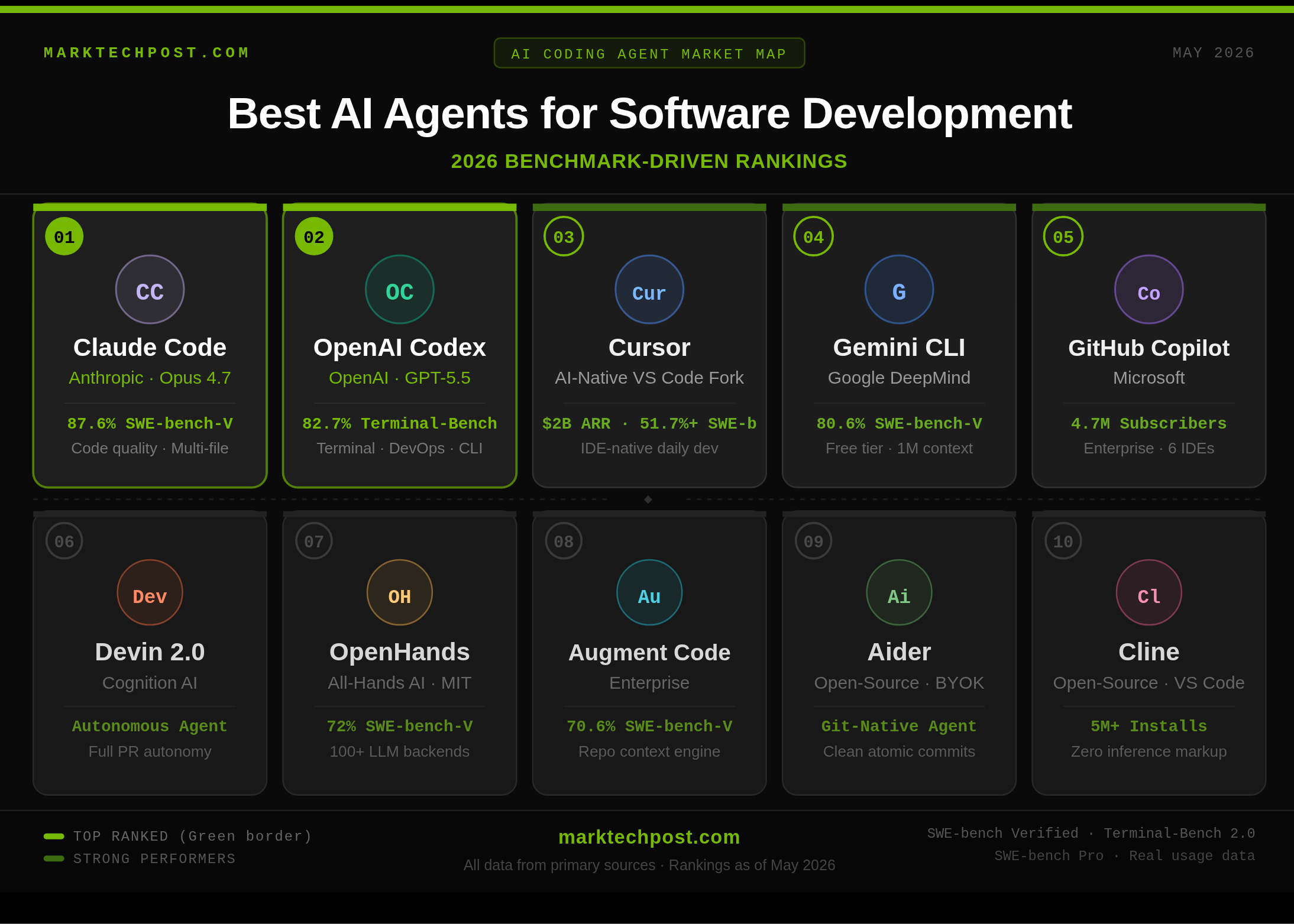
By early 2026, the AI coding agent landscape has transformed dramatically from the simple autocomplete tools of 2024. Today, roughly 85% of developers regularly use some form of AI assistance for coding. The tools have matured into fully autonomous systems that can read GitHub issues, navigate multi-file codebases, write fixes, execute tests, and open pull requests without any human input. This shift reflects a broader trend toward end-to-end automation in software development, where AI agents handle tasks that once required significant manual effort. The market has fractured into distinct categories, including terminal agents, AI-native IDEs, cloud-hosted autonomous engineers, and open-source frameworks that allow developers to swap in their preferred underlying model.
What are the main archetypes of AI coding agents?
AI coding agents now fall into four primary archetypes, each serving different needs:
- Terminal agents operate directly in the command line, helping with tasks like script generation and debugging.
- AI-native IDEs integrate intelligence directly into the development environment, offering features like code completion, refactoring, and test generation within a unified interface.
- Cloud-hosted autonomous engineers run on remote servers and can independently tackle complex multi-step tasks, such as fixing bugs or implementing features across an entire repository.
- Open-source frameworks provide flexible foundations that let developers customize agents by swapping in different language models or adding specialized plugins. This diversity means that choosing the right agent depends on your specific workflow—whether you prioritize speed, configurability, or out-of-the-box autonomy.
Why is SWE-bench Verified now considered unreliable?
SWE-bench Verified had been the industry standard coding benchmark since mid-2024, testing agents on 500 real GitHub issues from popular Python repositories. However, in February 2026, OpenAI’s Frontier Evals team published a detailed analysis that exposed critical flaws. Their review of 138 hard problems across 64 runs revealed that 59.4% had fundamentally broken test cases—for example, tests demanding exact function names not mentioned in the issue description or checking unrelated behavior from upstream pull requests. Worse, they found that all major frontier models (GPT-5.2, Claude Opus 4.5, Gemini 3 Flash) could produce correct patches using only the task ID, indicating systematic training data contamination. OpenAI concluded that improvements on SWE-bench Verified no longer reflect real-world software development abilities. This doesn’t make the benchmark entirely useless—other labs still use it as a rough gauge—but it’s no longer considered a reliable measure for frontier models.
What new benchmark is recommended to replace SWE-bench Verified?
Following the exposure of SWE-bench Verified’s flaws, OpenAI now recommends SWE-bench Pro as the replacement for evaluating frontier coding agents. SWE-bench Pro is designed to be more robust against data contamination and includes a updated set of problems with carefully validated test cases. The benchmark emphasizes practical, multi-step software development tasks that require understanding a codebase, generating fixes, and passing tests—similar to the original, but with tighter controls to prevent memorization. However, as of early 2026, SWE-bench Pro is still gaining adoption, and it’s not yet the universal standard. Developers and researchers are advised to look at multiple benchmarks, including task-specific evaluations like bug fixing or code generation, to get a more holistic view of an agent’s capabilities.

How should developers evaluate AI coding agents if benchmarks are flawed?
Given the limitations of benchmarks like SWE-bench Verified, developers should adopt a multi-faceted evaluation approach. Start by testing agents on your own codebase with realistic tasks—such as fixing a known bug or implementing a small feature—to see how they handle your specific language, framework, and project structure. Look at third-party evaluations from trusted sources that use diverse metrics, including time to complete tasks, code quality, test coverage, and user satisfaction. Also consider community feedback on forums, social media, and review sites to gauge real-world performance. Finally, pay attention to the transparency of the provider—do they share their evaluation methodology? Are they open about limitations? Combining these elements will give you a more reliable picture than any single benchmark score.
What percentage of developers use AI coding assistance by 2026?
By early 2026, roughly 85% of developers reported regularly using some form of AI assistance for coding, according to industry surveys. This widespread adoption spans from hobbyists to enterprise teams, covering tasks like code generation, debugging, refactoring, and documentation. The dramatic increase from earlier years is driven by improved model reliability, integration into popular IDEs, and the availability of free or low-cost tools. However, adoption is not uniform—some developers still rely on traditional methods for complex or security-sensitive code, while others fully embrace AI for routine work. The number is expected to rise further as agents become more autonomous and capable of handling entire development workflows without human intervention.