How the U.S. Military Transitioned 3,600 Homes to Geothermal Energy: A Step-by-Step Guide
Introduction
While national security priorities shift, the military's need for reliable, cost-effective energy remains constant. At Fort Polk in Louisiana, a groundbreaking $30 million project transformed outdated housing into a model of energy resilience. By installing a large-scale geothermal system in 3,600 homes, the base cut energy bills by 30% and saves over $2.6 million annually. This guide breaks down the process behind that achievement, offering a replicable blueprint for large-scale geothermal retrofits.
What You Need
- Existing housing infrastructure: A portfolio of military or residential units (e.g., 3,600 homes) with outdated heating and cooling systems.
- Funding commitment: A budget of approximately $30 million, secured through federal or departmental allocations.
- Experienced contractor: A firm like Ameresco with expertise in large-scale geothermal design and implementation.
- U.S.-manufactured equipment: Geothermal heat pumps, ground loop piping, and compressors made domestically to meet procurement rules.
- Site survey data: Geological and thermal conductivity studies to determine ground loop layout.
- Permits and approvals: Environmental clearances and base command authorization.
- Local workforce partnership: Community and labor support to accelerate installation and boost local economy.
Step-by-Step Guide
- Assess current energy performance and housing needs. Conduct an energy audit of all homes to measure baseline consumption, identify inefficiencies, and understand heating/cooling loads. Fort Polk's existing systems were outdated and poorly maintained, making them prime candidates for replacement. Document occupant feedback to ensure the new system improves comfort and reliability.
- Secure top-down support and funding. Align the project with the military's "resiliency" framework rather than sustainability alone. Present the business case: initial $30 million investment yields $2.6 million annual savings, with a payback period of roughly 11.5 years. Obtain approval from the Department of Defense and secure budgetary allocation. Build a cross-functional team including base leadership, engineering, and procurement.
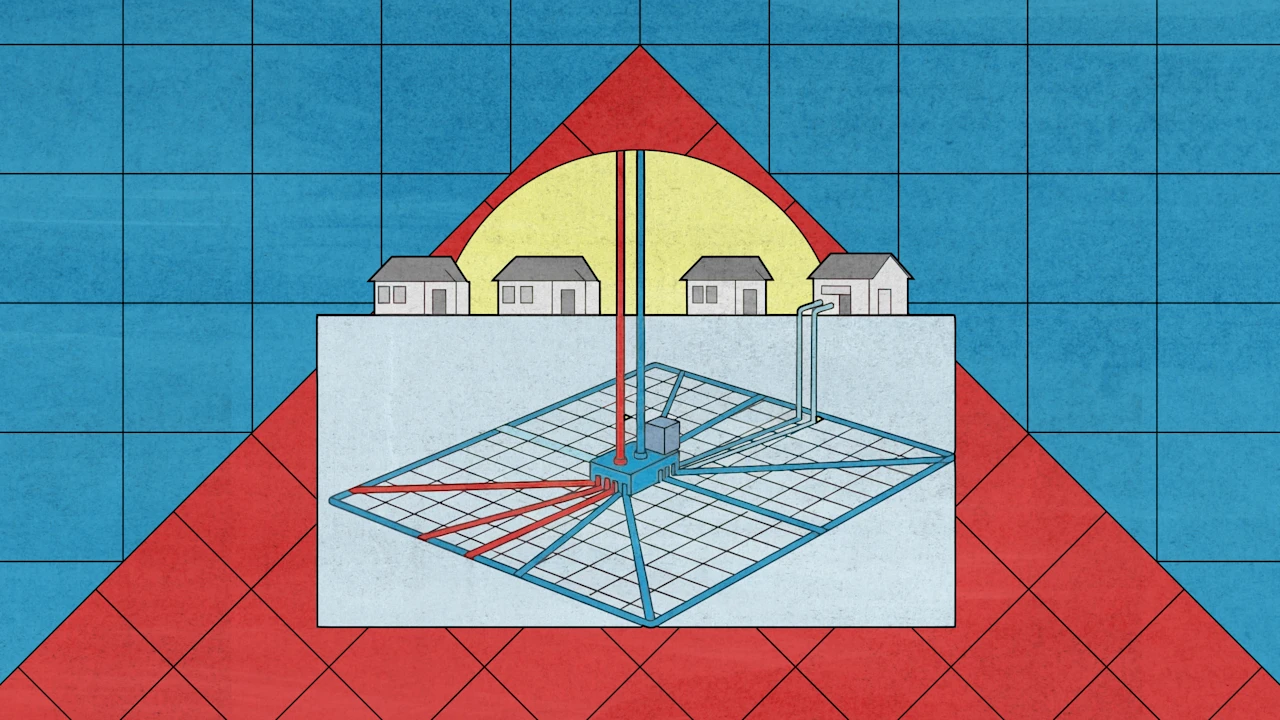
- Select a qualified contractor and design the system. Issue a request for proposals for large-scale geothermal retrofit. Choose a firm like Ameresco with proven experience. Collaborate on a design that uses vertical or horizontal ground loops depending on land availability. For Fort Polk, the design included a centralized loop field and individual heat pumps in each home. Ensure all equipment is sourced from U.S. manufacturers to meet 'Buy American' mandates.
- Install ground loops and heat pump infrastructure. Execute site preparation—drilling boreholes or trenching for loop fields. Connect the loops to a central distribution system. In each home, replace old furnaces or air conditioners with geothermal heat pumps. Test all connections and validate refrigerant levels. The installation at Fort Polk was completed in early March, demonstrating a tight timeline of about two years from planning to finish.
- Commission and integrate the system. Turn on the geothermal network and monitor performance across the 3,600 homes. Adjust loop flow rates and thermostat settings. Verify that the system eliminates fossil fuel use for heating (as noted by John Plack of Ameresco). Run a 30-day trial to ensure energy savings reach the projected 30% reduction and utility costs drop as expected.
- Establish ongoing maintenance and monitoring. Train base facilities staff on routine checks for heat pumps, loop pressure, and electrical components. Set up a digital monitoring platform to track real-time consumption and detect anomalies. Schedule annual inspections to maintain efficiency. Leverage savings (over $2.6 million per year) to fund future resiliency projects.
Tips for Success
Frame it as resiliency, not just sustainability. The military's emphasis on mission readiness means energy independence is a key selling point. Highlight how geothermal reduces reliance on external power grids and stabilizes energy costs.
Invest in local workforce. Fort Polk's project boosted the local economy by hiring regional contractors and technicians. Engage with community colleges for training programs.
Document and share results. Use the success at Fort Polk as a case study for other bases. The project's 30% energy reduction and $2.6M annual savings are compelling metrics for replication.
Plan for scalability. A single 3,600-home installation proves the concept. Design the system so it can be expanded to additional housing units or other base facilities.
Prepare for unexpected challenges. Ground conditions, supply chain delays, or weather can disrupt timelines. Build buffer time into your project schedule.
Leverage federal partnerships. Collaborate with the Department of Energy or national labs for technical expertise. The military has a history of climate resilience reports since 2003—use that research to strengthen your proposal.
By following these steps, large-scale geothermal retrofits can become a standard approach for military housing—delivering cost savings, energy independence, and improved quality of life for service members and their families.