Unraveling the Mystery of Lightning: New Insights from Space and Earth
Introduction: A Cosmic Perspective on Terrestrial Storms
Before he became a leading figure in lightning research, physicist Joseph Dwyer studied phenomena far beyond our planet. Using instruments aboard NASA's Wind satellite—positioned about a million miles from Earth—he observed solar flares and analyzed the stream of particles from the sun's surface. But when he relocated to Florida around the year 2000, Dwyer turned his attention closer to home: the mysterious process that triggers lightning bolts. His shift in focus reflects a broader scientific journey to understand one of nature's most spectacular—and still poorly understood—phenomena.
The Basic Recipe for Lightning
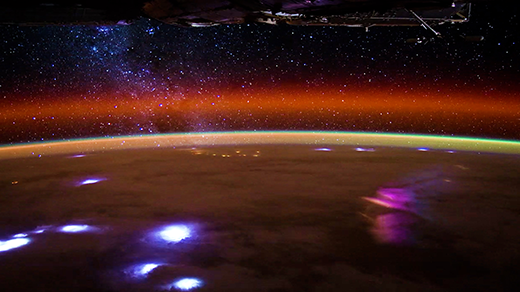
Lightning is essentially a giant spark of static electricity. Inside a thundercloud, collisions between ice particles and water droplets produce electrical charges: positive charges accumulate near the top of the cloud, negative charges gather near the bottom. This separation creates a strong electric field. When the field becomes intense enough to overcome the air's insulating properties, a discharge occurs—either within the cloud, between clouds, or from cloud to ground.
What We Know vs. What Remains Unclear
While the overall picture is well established, the exact mechanism that initiates the lightning strike remains a puzzle. The electric fields measured inside storms are typically far weaker than what would be needed to break down the air under normal conditions. This discrepancy has led scientists to seek alternative explanations.
The Runaway Breakdown Theory
One promising hypothesis, championed by Dwyer and others, is runaway breakdown. In this model, high-energy cosmic rays—created by supernovae, active galactic nuclei, or solar flares—enter the Earth's atmosphere and collide with air molecules. These collisions produce a cascade of relativistic electrons that can accelerate in the cloud's electric field, creating a chain reaction that effectively lowers the threshold for electrical breakdown. Essentially, the cosmic seeds help trigger the lightning flash.
Evidence from Satellite and Ground Observations
Dwyer's background analyzing data from the Wind satellite proved valuable when he started looking at lightning. Combined with ground-based measurements and instruments on high-altitude balloons, researchers have detected bursts of X-rays and gamma rays just before lightning strikes—exactly what the runaway breakdown theory predicts. These observations support the idea that relativistic electrons play a key role in the initial breakdown process.
Recent Surprises: Intense Antimatter Emissions
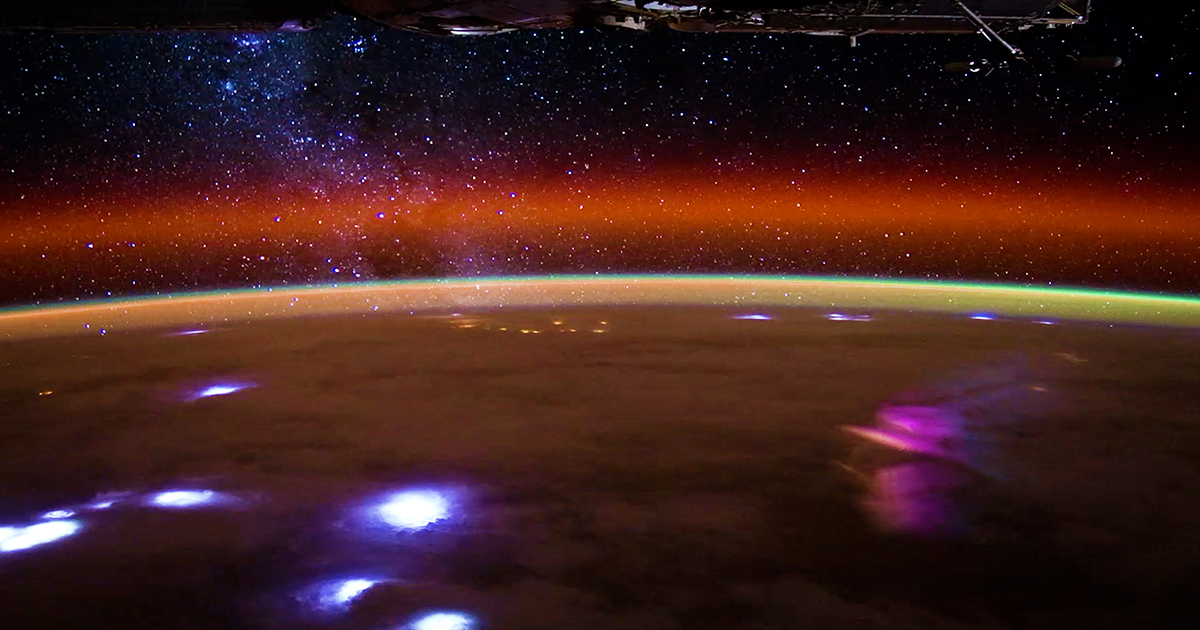
In the last decade, satellites like the Fermi Gamma-ray Space Telescope have revealed that thunderstorms also produce powerful bursts of gamma rays known as Terrestrial Gamma-ray Flashes (TGFs). Even more astonishing, these TGFs are accompanied by signatures of antimatter! When gamma rays pass near atomic nuclei, they can produce electron-positron pairs. The positrons (the antimatter counterpart of electrons) have been detected by spacecraft, confirming that lightning-related processes are far more energetic than previously imagined.
Connecting Thunderstorms to Cosmic Phenomena
This blend of astrophysics and atmospheric science has opened a new research field. For example, the same mechanisms that create lightning on Earth may operate on other planets with thick atmospheres, such as Jupiter and Saturn. Moreover, understanding lightning can help predict severe weather and improve safety for aviation and power grids.
Ongoing Mysteries and Future Research
Despite progress, many questions remain. Why are some storms more lightning-prone than others? What determines whether a discharge stays within a cloud or strikes the ground? And how do high-energy particles from space influence the frequency and intensity of lightning? Scientists are deploying arrays of ground-based sensors, flying research aircraft into storms, and using next-generation satellites to gather data.
Dwyer and his colleagues continue to refine the runaway breakdown model and search for direct evidence of the initial seed particles. Their work is a reminder that even everyday weather phenomena can hold deep cosmic connections. As Dwyer told reporters, “The more we learn about lightning, the more interesting it gets.”
Conclusion: From Solar Flares to Thunderbolts
Joseph Dwyer's journey from studying solar flares to exploring lightning illustrates how cross-disciplinary research can yield surprising insights. By applying tools and concepts from space physics to the Earth's atmosphere, scientists are slowly unraveling the mystery of what triggers a lightning bolt. The answer, it turns out, may involve not just clouds and charge, but also cosmic rays from far away—and even particles of antimatter. The story of lightning is far from complete, but each new discovery adds another fascinating chapter.