Breaking: HTML-in-Canvas API Unveils Real Semantic Rendering; Hex Map Analytics, E-Ink OS Also Hit News
HTML-in-Canvas: Semantic Rendering Inside Canvas
A groundbreaking API now allows developers to render real, semantic HTML inside a <canvas> element while applying visual effects. This experimental feature, HTML-in-Canvas, is available in Chrome 146 with the chrome://flags/#canvas-draw-element flag enabled.
"HTML-in-Canvas lets you embed actual HTML content into a canvas context, complete with styles and interactivity," explained developer Amit Sheen, who created demos at the HiC Showroom. "It's a game-changer for combining the power of canvas with the semantics of DOM."
This capability opens doors for richer data visualizations, interactive graphics, and even hybrid app interfaces. Developers can now apply filters, transformations, and animations to real HTML elements without losing accessibility or searchability.
Hexagonal World Map Analytics: Design Meets Engineering
Ben Schwarz (no relation to the Schwarz of CSS fame) shared a retrospective on building a hexagonal world map for analytics. The project leverages SVG and CSS to create a visually compelling, data-dense interface that works across devices.
"We had to balance design constraints with engineering, using SVG for the grid and CSS for responsive layout," Schwarz noted in a recent post on the Calibre blog. "The result is a heat map that's both beautiful and functional."
The approach uses hexagonal tiling to represent geographical regions, allowing for uniform data aggregation and reduced distortion compared to traditional maps. This technique may influence future analytics dashboards.
Rekindle: A Web-Based OS for E-Ink Devices
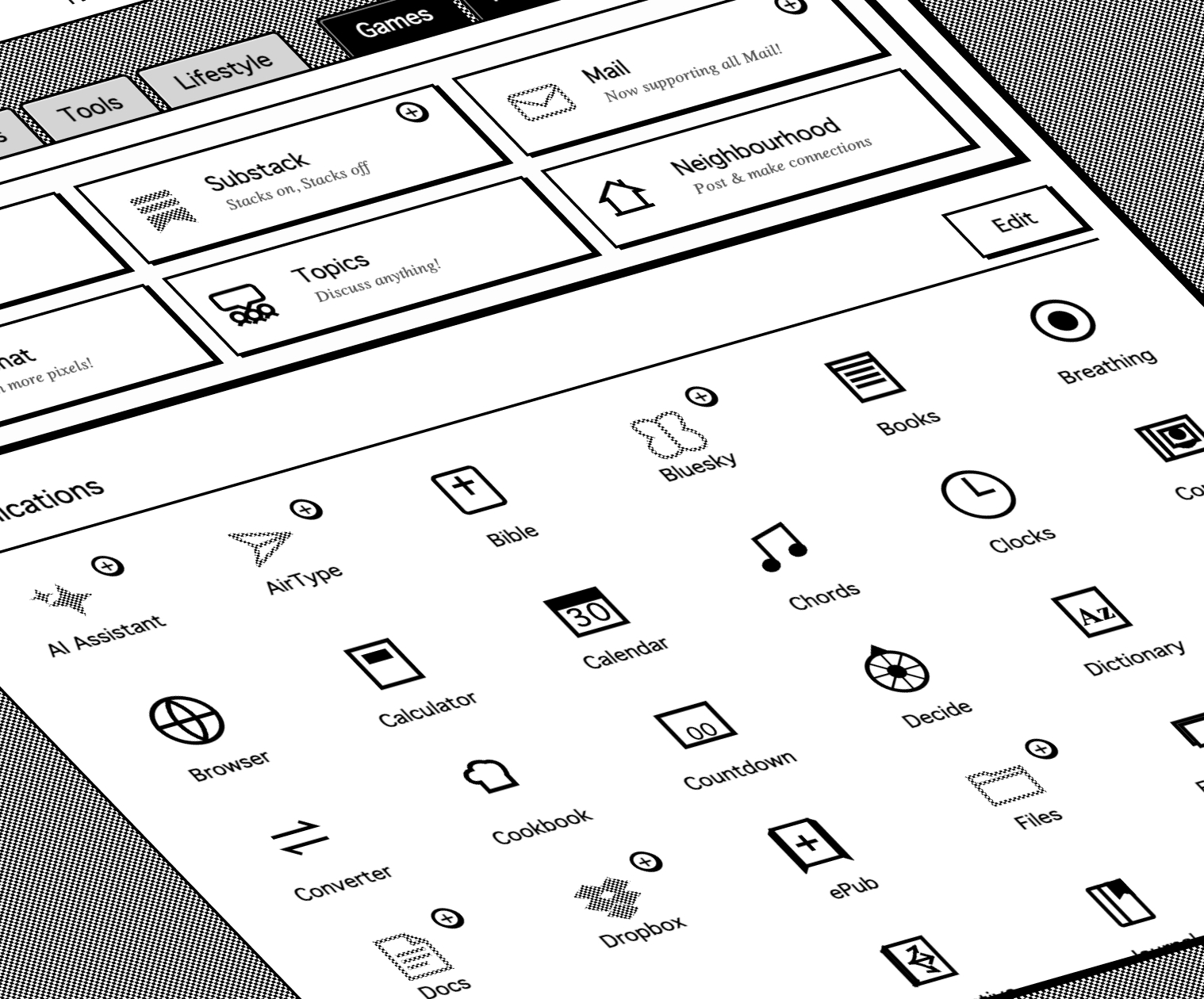
Rekindle emerges as a fully web-based operating system tailored for e-ink devices like Kindle, Kobo, and Boox. Designed in black and white with no animations, it optimizes battery life and readability on low-power screens.
"E-ink devices often ship with proprietary browsers that ignore useful media queries," said an anonymous e-ink developer. "Media Queries Level 5 could query hover capability, display update frequency, and color depth, but current hardware limits adoption."
Rekindle includes an extensive set of features and apps, but its existence highlights the gap between web standards and e-ink browsers. Whether demand for such optimization will grow remains uncertain, but the project sets a precedent for future e-ink web apps.

CSS Image Source Replacement: A Surprising Trick
Developer Jon discovered that the CSS content property can replace an <img> element's src attribute. The code img { content: url(new-image.png); } works in all current browsers, a fact that surprised many.
"I was shocked to find this works universally," Jon tweeted. "You can even use image-set() for resolution-aware switching. How did I miss this?"
The content property has been Baseline for 11 years, yet this usage remained obscure. It enables dynamic image replacement without JavaScript, ideal for responsive design or thematic changes.
Background
These developments represent a wave of innovation across the web platform. HTML-in-Canvas stems from ongoing efforts to bridge declarative and imperative graphics. Hex maps build on decades of cartographic visualization. E-ink optimization faces hardware inertia, and CSS image tricks reveal hidden potential in existing standards.
All four examples push the boundaries of what browsers can do—sometimes with experimental flags, sometimes with tried-and-true properties.
What This Means
For developers, HTML-in-Canvas could simplify complex graphical UIs that previously required heavy JavaScript. Hex map analytics offer a new design pattern for global metrics. Rekindle signals that e-ink devices may eventually embrace modern web standards. And the CSS content trick provides a lightweight alternative to JS image swaps.
Each innovation comes with caveats: flags, limited device support, or obscurity. But together, they hint at a more flexible, performant web. Keep an eye on these experiments—they may shape the tools we use tomorrow.